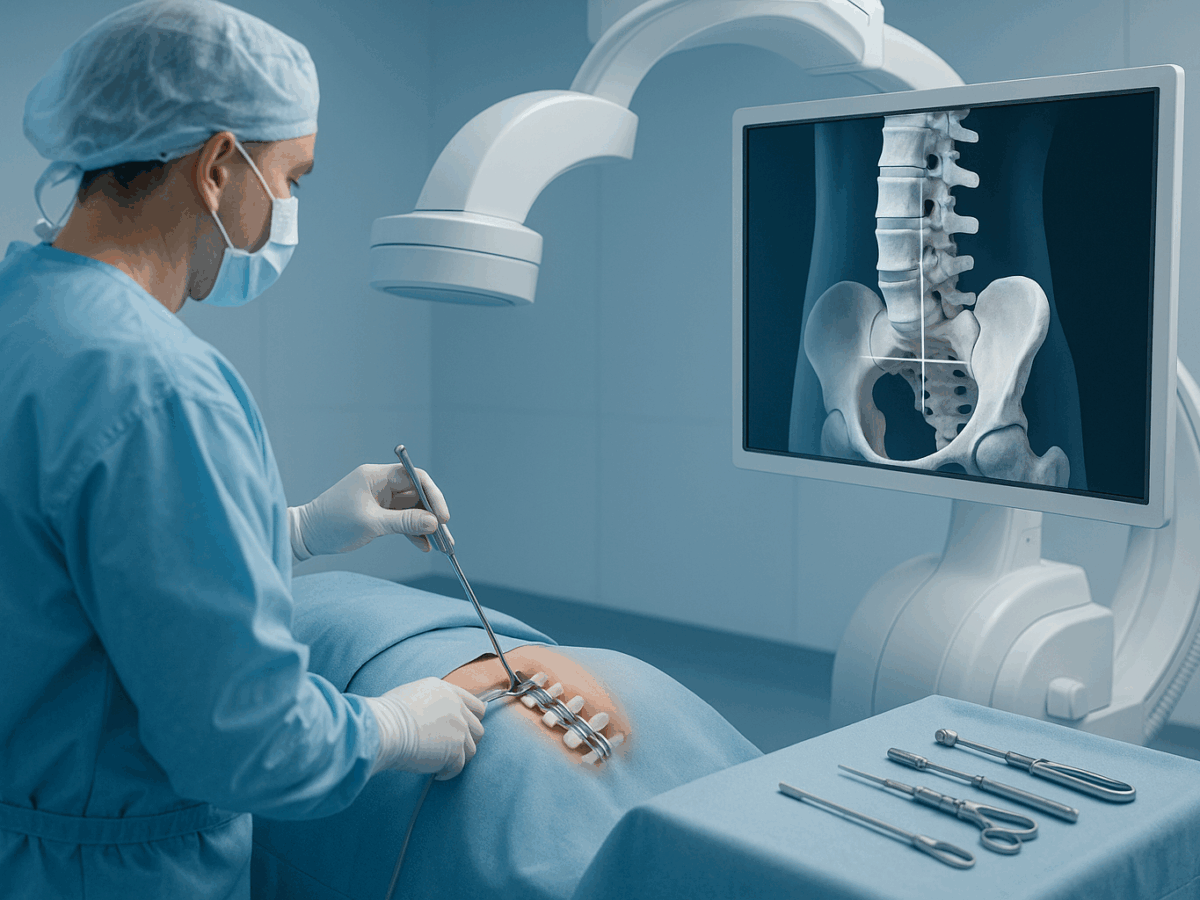
Advances in Minimally Invasive Spine Surgery: Patient Benefits & Risks
Spinal health is a cornerstone of overall well-being, yet conditions such as herniated discs, spinal stenosis, and degenerative disc disease continue to impact millions worldwide. For patients facing spinal issues, traditional open-back surgeries often carried significant risks, extended recovery periods, and post-operative discomfort. Today, however, the field of spine surgery has undergone remarkable transformation. Minimally invasive spine surgery (MISS) offers a sophisticated alternative that reduces trauma, shortens recovery times, and enhances patient outcomes. Experts like Dr. Tapan Daftari are pioneering these approaches, helping patients regain mobility with fewer complications and faster rehabilitation.
This article explores the latest advances in minimally invasive spine surgery, examining both the tangible benefits for patients and the potential risks that must be considered.
Understanding Minimally Invasive Spine Surgery
Minimally invasive spine surgery refers to a set of surgical techniques that aim to address spinal disorders through smaller incisions, specialized instruments, and advanced imaging guidance. Unlike traditional open surgeries, which often require large incisions and significant disruption of surrounding muscles and tissues, MISS focuses on precision and minimal tissue damage.
These techniques utilize tubular retractors, endoscopes, and microscopes to access affected spinal areas without extensive cutting or muscle stripping. The primary goals are to alleviate pain, restore function, and reduce the overall physical stress of surgery on the patient. Common procedures performed via minimally invasive methods include lumbar decompression, spinal fusion, discectomy, and certain types of scoliosis corrections.
Key Patient Benefits of MISS
One of the most significant advantages of minimally invasive spine surgery is reduced post-operative pain. Because surgeons avoid large incisions and limit disruption to muscles and connective tissues, patients often experience less discomfort following the procedure. This improvement not only enhances immediate recovery but also lowers the need for prolonged opioid use, which has become a critical concern in modern pain management.
In addition, MISS techniques generally lead to shorter hospital stays. Many patients can return home the same day or within a few days, compared to the one to two-week hospitalizations often required after traditional open surgeries. Early mobility is a cornerstone of effective rehabilitation, and patients benefit from regaining independence more quickly.
Another advantage lies in the precision of surgical intervention. Advanced imaging technologies such as intraoperative fluoroscopy, 3D navigation, and robotic-assisted systems allow surgeons to target affected areas with exceptional accuracy. This reduces the risk of accidental damage to surrounding tissues, nerves, or the spinal cord itself. Improved precision also contributes to better long-term outcomes, such as sustained pain relief and spinal stability.
Finally, cosmetically, minimally invasive techniques leave smaller scars, which can be meaningful for patients concerned about visible post-surgical marks. While aesthetics are secondary to functional outcomes, they contribute to overall patient satisfaction and confidence during recovery.
Innovations Driving Minimally Invasive Techniques
Recent years have seen a surge in technological advancements that have expanded the capabilities of MISS. Robotic-assisted spine surgery, for instance, allows for unparalleled precision in screw placement during spinal fusion procedures. These systems integrate preoperative imaging with real-time surgical navigation, enhancing both safety and efficiency.
Endoscopic spine surgery is another breakthrough. By introducing high-definition cameras through tiny incisions, surgeons can visualize the spine’s internal structures without large openings. Endoscopic methods are particularly effective for treating herniated discs, spinal stenosis, and certain nerve compressions, offering reduced pain and faster functional recovery.
Laser-assisted and ultrasonic technologies are also being integrated into minimally invasive procedures. These tools allow for targeted tissue removal with minimal collateral damage, improving healing times and reducing inflammation. In parallel, computer-assisted navigation systems enhance surgical planning and execution, providing surgeons with a precise roadmap for complex interventions.
Together, these innovations reflect a broader trend in medicine: prioritizing patient-centered care while leveraging technology to maximize outcomes and minimize risks.
Potential Risks and Considerations
While the benefits of minimally invasive spine surgery are compelling, patients must understand that no surgical intervention is entirely risk-free. Complications, though less frequent than in traditional open procedures, can still occur. Common risks include infection, bleeding, nerve injury, or incomplete symptom relief. In some cases, patients may require follow-up procedures if initial outcomes are suboptimal.
Additionally, not all spinal conditions are suitable for minimally invasive approaches. Complex deformities, severe spinal instability, or extensive multi-level disease may still necessitate traditional open surgery. Surgeons conduct thorough preoperative assessments, including imaging studies and functional evaluations, to determine the most appropriate surgical plan.
Patient factors also play a critical role. Age, overall health, bone quality, and prior surgical history can influence both the feasibility and success of minimally invasive techniques. Shared decision-making between the patient and surgeon is essential to set realistic expectations and mitigate potential risks.
Recovery and Rehabilitation
Postoperative care is a vital component of the minimally invasive spine surgery experience. While MISS typically allows for faster initial recovery, structured rehabilitation is essential to restore strength, flexibility, and spinal stability. Physical therapy programs often focus on gentle core strengthening, posture correction, and gradual reintroduction of functional activities.
Patients are encouraged to maintain open communication with their surgical team to monitor progress and address any emerging concerns. Recovery timelines vary based on the specific procedure, the patient’s overall health, and adherence to post-surgical guidelines. However, most patients experience significant improvement in pain and mobility within weeks, with long-term benefits manifesting over months.
Looking Ahead: The Future of Spine Surgery
The evolution of minimally invasive spine surgery is ongoing. Researchers and clinicians are exploring artificial intelligence, machine learning, and predictive analytics to enhance surgical planning and postoperative outcomes. Personalized surgical approaches, informed by genetic, anatomical, and lifestyle factors, are likely to redefine patient-centered spine care in the coming decade.
Emerging technologies such as augmented reality-assisted navigation, bioengineered implants, and regenerative medicine interventions promise to further reduce risks and accelerate recovery. As these advancements mature, patients can expect increasingly safer, more effective, and less invasive solutions for spinal disorders.
Conclusion
Minimally invasive spine surgery represents a transformative shift in how spinal disorders are treated. By reducing surgical trauma, enhancing precision, and promoting faster recovery, these techniques offer significant advantages over traditional open procedures. Yet, like all surgical interventions, they carry inherent risks that must be carefully considered in consultation with a qualified spine specialist.
Keep an eye for more latest news & updates on Nowaio Technical!